
FUTURE SOUND OF LONDON
ADVENTURES IN ETHERSPACE. THE RETURN OF THE RADIO RENEGADE.
Unpublished MOJO Piece. September 1997.
There's a quiet revolution going on in dance music right now, one that doesn't have a lot to do with the block-rocking global dominating aspirations of the main arena. Evidence of this rediscovered eclecticism is breaking out all over, from backroom djs to bedroom isolationists. A decade on from the second summer of love maybe we need reminding that turntable skills set the precedent for this whole scene. Afrika Bambaata and other ghetto-vets playing in the park changed the way we thought about records as finished product. And yet a decade or two later the whole scratch and mix ethos has been vulgarized by overpaid jocks with bloated egos who segueway thirty or so records together seamlessly, soullessly, pausing only to collect their ten grand from the Superclub promoters who perpetuate the whole festering spectacle. This is a world where 'eclectic' now means playing hardbag and handbag house in the same set. Dance audiences conspire in the same herd like complicity. The result? You end up with dj and crowd feeding off each other’s worst conservative instincts to the detriment of a scene that was built on plunder, playfulness, deconstruction, and montage.
But now there are signs that the barriers are breaking down again. And in the midst of all its futuristic rhetoric and cybernetic possibilities one of the places that dance music’s new mood is developing is in the traditional domain of etherspace. From innovative radio shows tucked away in down time, to new ways of presenting those shows, the mavericks are reclaiming the airwaves. The two tendencies came together splendidly recently when Manchester dj Matt Thompson handed over the first two hours of his 'Late Night Dance Soundtrack' show on Kiss FM to Future Sound of London, who presented the latest in a series of mixes beamed down pristine ISDN lines. With this latest initiative, band members Garry Cobain and Brian Dougan have taken the dance scene’s original freeform rhetoric at face value and thrown the rule book out of the window. A week of pre-production was spent painstakingly piecing together a two-hour sonic mosaic where beat poetry sits next to hardcore white noise, and where Bill Hicks comedy rants weave in and out of 70s porno soundtracks. "People are very open at home when they listen to radio" says Gary Cobain, "and there's great potential for us to play games with that. ISDN was the icing 'cos we could add this new element - live from Dollis Hill to the world." At their recent hook up with Brighton’s Essential festival last year journalists asked if this wasn't all a bit, well, cold. "No more than a couple of little pin men on stage twiddling with equipment and mumbling between tracks. That's pretty cold," replied Cobain. But it’s as much in the content, as in the form and function, that the new radio renegades come alive. "We spent months djing it at home to the point that it would work for even the most ardent narrow-minded dance fan. We spent ages combining some of those records so that in the flow of it you would understand it as a psychedelic thing, as a head exercise. Before 'Without her' by Harry Nilsson we blend a poem read by Robert Bly at one of those men’s seminars out in California about how his woman has left him. And under that was an instrumental track on the Beastie Boys label which transforms it all into a beat poem. I love doing that shit."
Another highpoint occurs when the decks grind to meltdown on the title line from Jonathon King’s 'Everyone’s gone to the moon.' The chorus of The Walker Brothers "The sun ain't gonna shine anymore" is looped and drenched in echo to squeeze out every last drop of existential angst. Listening to the FSOL team enthuse about The Beatles sheer versatility or The Stones dark psychedelic masterpiece Satanic Majesties it becomes clear that they aren't weighed down by the cultural baggage of previous generations, nor are they impressed by the blind reverence of certain peers. "When I read about the Beatles and the way in which they worked I just think all these indie bands who are emulating them are missing the spirit of the thing." says Cobain, hinting that such explorations might just be indicating the new musical direction of FSOL. "We both have an ear for this defining sound right now and neither of us can quite pin down what it is. Maybe it’s a private manifesto but all those things on the recent ISDN mix are going through our mincer onto the next album."
When he joined Kiss-FM in 1994 Matt Thompson thought radio was "stale and formulaic. The opportunities for being creative were very small." He made the station’s late-night slot his own, expanding it beyond its standard techno-house brief. A typical show might feature a Bernard Herrmann soundtrack next to Kraftwerk next to the latest breakbeat mutation. "I'm not aware of any other station that allows someone that amount of hours to do exactly what they want," says Thompson with justifiable pride. In contrast to Radio One, which still doggedly broadcasts single genre shows (Tong’s commercial house, Westwood’s hip hop, Rampling’s trance) to what it presumably thinks are separate discreet audiences, Thompson’s show is much more in keeping with the new spirit. "Since 1994 club culture hasn't really reflected people’s music tastes. If you go to someone’s record collection the diversity always surprises you. I try to reflect that diversity in my shows."
The new underground hasn't got a name, although you can be sure someone is working on that right now. "Hopefully there's some sort of common thread to what I do." ponders Thompson. "People call it eclectic, but half the time eclectic is just an excuse for people who can't dj to go out and play badly," he laughs. As tech-house and speed garage have illustrated, dance has arguably become obsessed with tagging genre labels on to everything to the detriment of diversity. FSOL and other kindred spirits counteract this with a tacit acknowledgment that the next big thing will be the fact that there is no next big thing, just an ever-increasing fragmentation with everything permanently up for grabs. "Right from the very start we kept away from clubs because the environment was always a bit limited." says Gary Cobain. "I don't decry clubs and there are times when a minimal beat and a bassline is fucking great but if we ever set up one it would have to entail a completely different way of doing it. The whole musical establishment from dance A & R men to journalists is always convinced we need an arena, a bodily gathering to authenticate what's happening. Our attitude is, maybe that bodily gathering is selling us short. Maybe that need to feel a bond with people in a club environment is not what it’s about right now. Maybe the individual needs to do some homework on an individualistic level. Which is where radio can help. We can beam these viruses into people’s front rooms. We've never advocated a life of celibacy and staying on the internet for the rest of your life. We're just trying to re-evaluate what's being communicated."
FUTURE SOUND OF LONDON. ISDN MIX AS BROADCAST ON KISS-FM MANCHESTER. MONDAY AUGUST 25 1997.
DEEPAK CHOPRA - FROM THE HIGHER SELF *
JOHN WILLIAMS - RAGA VILASAKHANI *
ANANDA SHANKAR - STREETS OF CALCUTTA
WALKER BROTHERS - THE SUN AIN'T GONNA SHINE ANY MORE *
ROBERT BLY -THE FEELINGS I DON'T HAVE *
ETHERIDGE KNIGHT - DESIRE *
PINK FLOYD - DRAMATIC THEME
ROLLING STONES - 2000 LIGHT YEARS FROM HOME
STEVIE WONDER - VENUS FLYTRAP AND THE BUG
WHITE NOISE - LOVE WITHOUT SOUND
DAVID TORN - NETWORK OF SPARKS
JOHN BARRY - FANCY DANCE
WIZARDS OF OOZE - DOOHAH DIP
GARY LUCAS -PARADISO
MYSTIC MOODS - COSMIC SEA
JOHNNY HARRIS ORCHESTRA - FOOTPRINTS ON THE MOON
STEVEN JESSIE BERNSTEIN - MORE NOISE PLEASE
SKYLAB - THE TRIP
SPENCER DAVIS GROUP - WALTZ FOR CAROLINE
WALKER BROTHERS - THE SUN AIN'T GONNA SHINE ANY MORE *
CHARLES BUKOWSKI - GET DOWN *
JIMI HENDRIX - VOODOO CHILE *
CHARLES BUKOWSKI - LITTLE SUBMARINE *
MARIO MIGLAIRDI - MALTALO
STEREOLAB/NURSE WITH WOUNDS - TRIPPIN WITH THE BIRDS
SUNDIAL - EXPLODING IN YOUR MIND
CHEMICAL BROTHERS - PRIVATE PSYCHEDELIC REEL *
THE ACID DJ - WHITE LABEL
CHEMICAL BROTHERS - WHERE DO I BEGIN *
TERRY BROOKS AND STRANGE - RULER OF THE UNIVERSE
PRIMAL SCREAM - HIGHER THAN THE SUN
DAVID AXELROD - THE SMILE
ROBERT BLY - A GATHERING OF MEN *
SHIZUO VS SHIZOR - MAKING LOVE *
HARRY NILSSON - WITHOUT HER
MORTON SUBOTNIK - SILVER APPLES OF THE MOON
SHIZUO - DIGITAL HARDCORE
JACK NITZCHE - THE HASHASHIN
PERRY AND KINGSLEY - JUNGLE BLUES FROM JUPITER
CHEMICAL BROTHERS - PRIVATE PSYCHEDELIC REEL
BEATLES - TOMORROW NEVER KNOWS
TERRY BROOKS AND STRANGE - RULER OF THE UNIVERSE
WIZARDS OF OOZE - HELGA
TURN ON - TRIPLE CAUSE OF POETRY
BIOMUSE - MEPRAL
RANDY CALIFORNIA - DOWNER
BO HANSSON - FOG ON THE BARROW DOWNS
23 SKIDDOO - THE GOSPEL COMES TO NEW GUINEA
GLEN CAMPBELL - BY THE TIME I GET TO PHOENIX
BEATLES - WITHIN YOU WITHOUT YOU
SEVENTH WAVE - INTERCITY WATER RAT
FUTURE SOUND OF LONDON - TRYING TO MAKE IMPERMANANT THINGS PERMANANT
DAVID AXELROD - SONG OF INNOCENCE
BEACH BOYS -CAROLINE NO *
ANANDA SHANKAR - DANCING DRUMS
HEADSTONE LANE - BEERS
FAD GADGET - BACK TO NATURE *
COIL - STATIC ELECTRICIAN *
DICK HYMAN - GIVE IT UP TURN IT LOOSE
FANTAMUSIC - LE DERNIER VOYAGE
PEARLS BEFORE SWINE - I SHALL NOT CARE
HARRY NILSSON - PERFECT DAY
BILL HICKS - FROM TOTALLY BILL HICKS *
SOFT MACHINE - HOPE FOR HAPPINESS
HELMUT ZACHARIAS - LIGHT MY FIRE
* denotes sample or brief extract
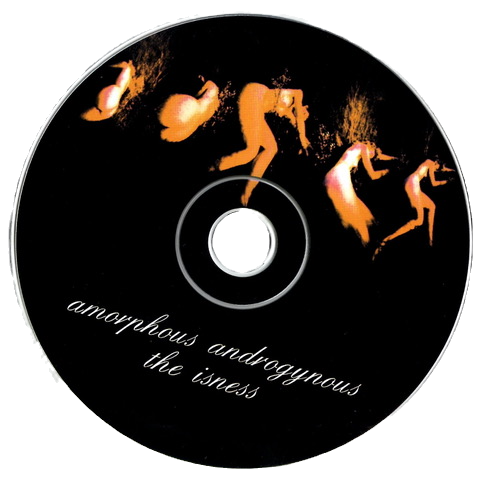
THE ISNESS.
I was going to do some press for FSOL at one point. This was a draft for what would have been a press release for the Isness album released in 2002.
"First book I ever read was the dictionary. Thought it was a poem about everything." Stephen Wright.
It all began with the mix. The mix was going to liberate us all. Dance music technology, samplerdelica, the new technocracy, cut and paste culture, it all came together in the mix. One big poem about everything. A whole culture was built around that thinking. Remember the slogans, the philosophy, the revolutionary rhetoric? "The future's up for grabs". "Creativity is limitless". "Everything’s possible". “Creativity is the field. Copyright the fence.” What we mostly ended up with was the linear tyranny of beat mixing, and bloated superstar egos. A musical and sub-cultural revolution that was supposed to spawn new higher states of consciousness had merely spawned new markets, new consumers and the same old discos in a different shed.
Garry Cobain and Brian Dougans confronted this cultural impasse by assembling the now legendary, and globally bootlegged ISDN mix A Monstrous Psychedelic Bubble (Exploding In Your Mind.) Recorded shortly after the completion of the Dead Cities album in 1996 and beamed live "from Dollis Hill to the world" this smorgasboard of unearthly delights didn't so much breach musical barriers as smash right through them. Bubble could only have been conceived by artists versed in dance culture and dance music technology, but in utilizing that technologies sonic possibilities and notions of montage, collage and cultural plunder Garry and Brian threw the rule book out of the window. The resulting two-hour head trip featured a stunningly varied array of artists, including The Beatles, Rolling Stones, Beach Boys, Hendrix, Pink Floyd, Pearls Before Swine, John Barry, Dik Hyman, Morton Subotnik, David Axelrod, Perrey and Kingsley, Ananda Shankar - and Jonathon King! Coil and The Chemical Brothers intertwined with The Spencer Davis Group and Bo Hansson. Synth pop sat next to acid rock. Beat poetry dovetailed into hardcore white noise. Glen Campbell’s By The Time I Get To Phoenix melted into 23 Skidoo. Light My Fire (Helmut Zacharias's version naturally) sat alongside the prophecy and spiritual guidance of Bill Hicks and Deepak Chopra. Harry Nilsson’s 'Without her' was juxtaposed with a red raw poem read by Robert Bly about how his woman had left him. ("Fuck Coltrane. Fuck Art. Fuck Poetry. Fuck God") This was as far away from genre beat mixing as you could get but it wasn't just what was played, it was the way the seperate sound sources were wrenched from their original context and re-configurated that made 'Bubble' a truly psychedelicized breath of fresh air. Decks grind to meltdown on the title line from Jonathon King’s 'Everyone’s gone to the moon.' The chorus of The Walker Brothers "The sun ain't gonna shine anymore" is looped and drenched in echo. Robert Wyatt’s clear plaintive English voice rises from the haze like a dawn raga. A Monstrous Psychedelic Bubble was a place where absurdity and profundity could co-exist in multi-layered bliss. Everything was up for grabs again.
The ISDN mix didn't just signify a radical re-evaluation of FSOL's raison d'être,
it also helped articulate Garry's increasing disenchantment with the constrictions of dance culture. Bubble also brazenly acknowledges, in its choice of music, that the discarded vinyl gems that Garry and Brian were finding at car boot sales were often far weirder than any of the supposedly cutting-edge items emerging from an increasingly moribund dance scene. "For me hardcore electronics, hardcore bands, they're all passé, says Garry. And with techno music increasingly atrophying into a quaint Metropolis meets Doctor Who future-nostalgia. The Future Sound Of London moniker was also starting to get a bit problematic. "The name never really was much to do with us being 'futuristic'" says Garry. "For me that whole 'future lust' thing went out five years ago when the internet explosion happened." He was also unhappy with dance music’s increasing tendency to promote male egotism and aggression. And so, for their next release Garry and Brian made a conscious decision to return to their Amorphous Androgynous alias.
More than anything Garry was sick of the band being pigeonholed as art-house electronica. "It was funny, people would come to the studio and they'd say, so you like Brian Eno and Tangerine Dream yeah? And I'd be thinking 'I must be doing something wrong here, because actually I like Barbara Streisand and Rachmaninov and Debussy, and all these odd moments that just capture my soul, from crappy Italian film music to an Indian raga to Frank Sinatra'. That was my perspective on music."
The original plan was to release A Monstrous Psychedelic Bubble as a dj compilation album but when it became obvious that copyright clearance for all these multi-layered fragments was going to be a logistical nightmare Garry and Brian decided to apply the explorations and thinking behind their sonic mosaic to their own music. This gear change in musical direction has reached fruition with The Isness.
So why has it taken five years? Well for starters it’s easy to forget just how incredibly prolific Garry and Brian were during the first half of the 1990s. In addition to the three FSOL albums Accelerator (1992) Lifeforms (1994) and Dead Cities (1996) and the Amorphous Androgynous album Tales of Ephidrina (1993) there were numerous extended, ie 30 minutes plus, 'singles', Papua New Guinea, Cascades, My Kingdom, and a plethora of other one offs and aliases. Gary felt that the outfit was becoming a bit of a compliant corporate tool. It was time to dis-engage, tune out, re-assess. There was physical upheaval as the band re-located from the Earthwork studios in Dollis Hill to the Old Street hinterland. And then Garry got ill. First he thought it was the positive ions in the computers that were fucking with his immunity system. Later he discovered it was the mercury from his fillings. In the meantime he trawled the globe, spent time in India, fasting, meditating, learning, healing.
The Isness is part of that healing process, a holistic organic all barriers down approach to music making without losing any of that restless quality which saw FSOL constantly railing against orthodoxy in the early nineties.
"Today a young man on acid realized that all matter is merely energy condensed to a slow vibration and that we are all one consciousness experiencing itself subjectively. There's no such thing as death, life is only a dream and you are the imagination of yourself. Here's Tom with the weather." Bill Hicks.
Anyone who thinks of psychedelia merely as a musical category fixed in time and space is going to have trouble with this record. Although the musical revolution of the late sixties is undoubtedly the major underpinning influence Garry and Brian recognize that psychedelia transcends its stylistic and temporal trappings and is as much a state of mind as a musical genre. Just one glance at the sheer array of artists featured on the Monstrous Psychedelic Bubble mix should be enough to convince you that this is not a band weighed down by the cultural baggage of previous generations. "I've had people telling us precisely why the Moody Blues aren't hip" says Garry. "What they mean is why the Moody Blues weren't perceived as hip when they were growing up in the late sixties. It means nothing to us. I no longer care about the critical mass of the first week of sales. I prefer to think of our music as a little recorded time capsule that will still have relevance and resonance in years to come. There's this glorious hybridisation where anything goes right now, and anyone who's trying to set up markets cynically using demographics is already part of the old older. The new order for me is based on female intuitive soul and that will always win through over demographic corporatization."
The Isness is part of that new intuitive order. There's a quiet revolution going on. Haven't you heard? Throw away your pager. Turn your answer machine off. Stop neurotically checking your text messages every ten minutes. Stop watching channel zero. None of this gadgetry will deliver you from banality or make you any happier. The Isness just might. Find some personal space, go placidly amidst the noise and haste and remember, as Jack Kerouac once said, "walking on water wasn't built in a day."
©Rob Chapman.